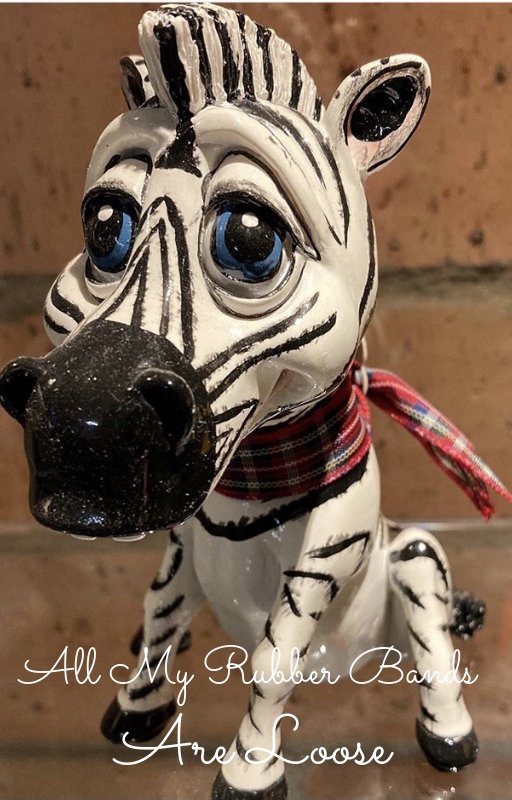
All my rubber-bands are loose.

A Zebra’s Tale.

In 2018 I was an addict. I had been by then for a couple of years. It’s a dirty word. A title that smears people with a label that depicts weakness. Perhaps to you it invokes images of an unkept disheveled person with track marks; or a skinny junky hanging by the Westfields entry waiting for you to drop some coin in their hat. Those images aren’t necessarily wrong; but are more likely the extreme vision of addiction. Today, more than any time before, people who reach that end start as I did – with prescription opioids. Medication provided to treat symptoms of other problems.

We all have our problems; some are more obvious than others.

I write this now with a clear head. Though it is still not always that way, it’s more often clear than not these days. For a long time, my thoughts were never clear. Just one big fog of prescription drug induced blurred existence. It didn’t start with opioids; or end there either. They though were by far the most addictive.

I’m a statistic of medical limbo. One of many adults who wait many years from the point of seeing a general practitioner to the finality of a clear understanding of their problems.

I was born in 1980. Some may say the end of generation x, others the beginning of the millennials. I say a generation of the medically lost. People born in that time and the proceeding decades are more likely to be living today with undiagnosed life-long chronic conditions or diseases than people born from the late nineties onwards.

Why?

In the medical profession there is an old adage, ‘when you hear hoofbeats think horses, not zebras.’ This is a standard medical industry way of reducing workload for diagnosis of conditions. Why consider a medical condition that is statistically unlikely? That’d be a waste of resources.

Unfortunately, with this scenario many people are misdiagnosed with more common problems than perhaps the ones that better fit their symptoms – purely because the decided diagnosis is more statistically common than other possibilities. Sometimes someone is not diagnosed at all, left only with a list of symptoms and no diagnosis because a GP or specialist is unprepared to investigate further because any other possible diagnosis would be too rare to consider. I’ve formed my own conclusion that the rarity of some diseases and conditions is purely because they remain unconsidered possibilities, and therefore under diagnosed. Meaning of course they are statistically rare.

Sometime late last century this attitude shifted in consideration to children, with more diagnosis of conditions thought to be rare, such as Autism Spectrum (including Asperger’s), or various collagen disorders. You might hear someone say these things weren’t around so much when they were a child. Really the conditions were but weren’t recognized as such due to being thought of as rare, so therefore unlikely to be considered for diagnoses. Many adults born prior to late last century are today still undiagnosed as the general medical system belief seems to be that any rare lifelong conditions would have been picked up in childhood, so therefore those possibilities are still not considered. This gap starts to close as children are recognized for a condition, then one of the parents is recognized for their own shared symptoms with their child.

Officially I am diagnosed with Fibromyalgia, a common comorbidity to Ehlers Danlos Syndrome (EDS). Unofficially I have the latter condition also, though officially diagnosed as Hypermobile Joint Disorder. Fibromyalgia is a list of symptoms that don’t quite fit together for any other diagnosis. EDS has strict and limited diagnosis criteria that doesn’t include many of the symptoms associated with it. The additional symptoms are recognized as part of the condition, but not accepted as forming part of the diagnosis.

In short, Fibromyalgia is statistically more common and therefore easier to diagnose then EDS.  In turn EDS is less likely to be considered as it is statistically less common.

A diagnoses paradox is formed from this approach.

If a condition is diagnosed more often, and therefore considered less rare, would it make the condition considered as a possible diagnosis more often?

The mascot of EDS is the Zebra, a symbol taken from that earlier mentioned old adage. EDS has been maligned as a likely diagnosis for decades. Despite the symptoms been well documented, the condition has not been well recognized.

There are several official forms of EDS. The various forms of EDS make up just over a dozen of the several hundred or so recognized types of collagen disorders of different types and names.

Collagen is a structural protein. A glue that forms our connective tissues and holds our bodies together. It is found in almost every aspect of every tissue group, therefore leading to various problems that differ depending on which proteins are faulty in an individual. For some people this will affect their vascular system, others their skin, for some their ligaments and muscles. Some people with EDS will have a swathe of issues, some a few, some will have just one or two problems. The condition is genetic, passed down from one generation to the next.

For hyper-mobile joints, common to EDS, there is a measure called the Beighton Scale. This officially recognizes the extent of a person’s hyper-mobility. My adult measurement is four from a total of nine. My preteen daughter’s official score is seven. During a recent conversation we discussed her hyper-mobility and how that relates to her needing to care for her body. I explained how our ligaments are much like rubber bands that hold our joints in position, and that our muscles are what then move those joints. Her observation, verbatim, was ‘all my rubber bands are loose.’ Yes darling – they are.

The benefit of the cool party tricks that hyper-mobility provide is far outweighed by the cost of a lifetime of management and maintaining a level of strength and fitness which is not required for most people. In a reasonably fit EDS body of my type, pain and fatigue are the biggest, but far from the only, inconvenience. If my body is not well maintained, the issues become substantially harder to manage. At my worst time I required a walking stick to maintain my balance, and could only exert minimum effort before fatigue overtook my abilities.

In my normal day the small muscles used for standard movements and posture have to work substantially harder than those of an ordinary person due to the lax ligaments that would normally hold the body to position. This can result in ongoing sustained muscle strain. In other words: constant chronic pain.

I now wear the anguish of knowing I’ve unwittingly passed these faulty genes on to my child. My pain, physical and otherwise, will be my daughter’s pain too.

My journey to diagnosis started in 2013 after the strain of life had started to wear down my resolve to work within my physical attributes. I’d always had pain, strains, and minor injuries, and had figured these to be part of a normal body. They were of course my normal, but not the normal of that the average person.

My GP took the standard approach, as he was trained. I was worn down, stressed, this was, as far as he could diagnose, causing my physical symptoms. He prescribed medication to help with the pain. I didn’t ask what the drug was, just followed advice. It was an anti-depressant. A standard medical system response to anything not easily recognized for diagnosis. These left me feeling less stressed, but no less symptomatic. They also dulled my mind and senses. I was left numb.

The medications were changed, others were trialed. I was placed on a psychological roller coaster from manic highs to crippling lows. When those medications seemed ineffective, or not effective enough, more were added. After some time, I was diagnosed with Fibromyalgia to explain the muscle pain. In more time I developed Parkinsonism’s. These been symptoms of Parkinson’s disease not directly related to that disease. In my case it related to the medications. I was given medication to treat those symptoms. Medication after medication after medication… All trial and error – as that is the medical system once it enters the grey areas of its unknowns. My clarity of thought and ability to function left me. The business I had started and worked to build for nine years became increasingly ill as I did. With no options left, I called in the liquidators in May 2015.

The business was gone, so soon would be the stress, so I was told. I would be better. A few months passed. I wasn’t better.

After some research I found that my symptoms most closely matched a connective tissue disorder, caused by deficient collagen. EDS to be precise. The GP advised it was too rare, very unlikely, not worth considering. We both heard hooves. I was prepared to investigate the sound further. He was interested in pursuing a different possibility.

He considered Mitochondria disease, and instructed that I should have a muscle biopsy for such. I arranged the surgery with a brilliant surgeon I had previously seen for several hemorrhoid repairs. Yes, several. Lax collagen in the bowel and associated areas causes several complications, such as prolapses and similar. This however, yet another secondary symptom of EDS, was decided to be caused from straining, nothing more. This despite it been unusual for someone to have multiple surgical repairs of the type; especially before age thirty-five.

The muscle biopsy surgery proved slow to heal, another symptom of EDS. You can trace the reducing ability of my body to heal through the various scars from more than a dozen surgeries over thirty something years. The biopsy sample proved negative. The post-surgery recovery lead me further down that path of addiction with the introduction of Targin, a slow release opioid.

I had till that time regularly taken Endone. Though not a treatment of symptoms, it was a great treatment for pain; for a while. The nature of opioids is that over time the body adjusts to the dose, and a higher dose is required. The more you have the more your body craves. This is addiction in action. Targin provided the same relief as Endone, but extended over a slow release period of twelve hours. Sweet golden pain relief. It’s short lived though. Not by dose, or days. Short lived by effectiveness in a few weeks. The longer you take an opioid the less effective it becomes, the higher the dose you need for it to be effective for pain. The more you take the more your body needs the opioid just to function. You literally become ill between doses. You’ll be nauseous, vomit, have a fever and shakes. The pain feels worse. You take the opioid not just for the pain anymore, but also to not feel ill. Some refer to this as ‘dope-sick.’

Any pain isn’t worse than what it was before you started opioids, but it does feel worse between doses. Your mind adjusts and makes the pain seem worse than it is, or ever was.

Imagine a clamp on your arm, pinching your skin. You take an opioid and can no longer feel the clamp. It’s still there, you can see it, you can’t feel it. The opioid wears off. You feel the clamp again. Now though it feels as if there is ten times as much pressure. The clamp hasn’t changed. It’s still there, exactly the same. The mind seeks the opioid hit. The mind makes the clamp feel tighter, so you’ll give it that hit. Once you’re past the withdrawals of the opioid, the clamp feels the same as before the addiction. The clamp is still the same clamp. The mind made it seem worse to increase the chance of another opioid hit.

I’ve experienced the same pain before and after opioid addiction for chronic pain management. The pain feels far worse whilst managing with opioids; the very thing that is supposed to reduce that pain.

I did what every opioid addict does. I increased the dose. I took it more often than I should. I became less mobile, I gained weight, I became even more less mobile. My struggling ligaments failed to hold my weight. My unused muscles failed to support the slack of loose ligaments. So on and so forth. It’s a death of a thousand cuts. It’s slow. It’s deliberate. No one cut is the final blow. They just all add up. A time of reckoning eventually comes.

Unhappy with the little diagnosis progress made, so far as it being only to confirm what was not wrong with me, and nothing to confirm the experienced symptoms, other than a loosely fitting Fibromyalgia diagnosis, I returned to considering the one condition that matched my symptoms – EDS.

I contacted the NSW Hospitals Genetics program and booked an appointment. With an appointment confirmed I requested the required referral from the GP.

In the interim time from 2013 to July 2017 I had seen three neurologists, two rheumatologists, a couple of psychologists, several physios and a pain management doctor, and his pain management counsellor. I was even asked, on more than one occasion, by more than one specialist, what was the point of seeking to rule in or out EDS. As they reasoned, it couldn’t be treated or cured if it was confirmed. As far as they were concerned there’d be no benefit to a diagnosis.

What’s in a name?

A name provides the ability to identify the list of symptoms with one name to any future treating doctors. The ability to gain support through and from people also afflicted by the same condition. The ability to find a way to manage what you have; to play the cards you’ve been dealt.

The problem with specialists is they specialize; not one considering the other specialists’ areas of expertise. They all consider their own areas of knowledge only. Rarely, if not ever, working together to discuss the end patient’s needs.

There’s always an exception though, for me this was the geneticist. This specialist relies on all the information provided by all the other specialists, plus their own investigations, to form an overall picture of a person’s health.

In July 2017 I received a diagnosis, of sorts, of EDS. I’m still in medical limbo due to the semantics of the condition’s definitions. I demonstrate several of the comorbidities of EDS, including dietary, blood pressure and other problems. These comorbidities however recognized as part of the condition are not recognized as part of the diagnosis. I have hyper-mobile joints, however my score on the Beighton scale is too low for clear diagnosis purposes. This despite my upper-back being significantly hyper-mobile, as that area of hyper-mobility is not counted in the official Beighton Scale used for diagnosis purposes. Currently I’m labelled as having EDS that cannot be confirmed under the current diagnostic criteria. This could change with further symptoms developing, another close relative receiving a confirmed diagnosis, or a change in the diagnostic criteria. Semantics. I have been diagnosed as having Hyper-mobile Joint Disorder. In my view the version of EDS known as hEDS, just by another name.

Sometime during that same period I was started on another medication to coincide with Targin, with a view I may decrease one medication dose as I increased the other. This new poison, as all medications are a poison of some sort, was called Lyrica. This is a drug that, at least at the time, came with a little leaflet that explained that the manufacturers didn’t know how the drug worked, but they did know the affects it had, and therefore how it could be used. For me the intention was for Lyrica to reduce the body’s nerve system from feeling pain. For this Lyrica works, for a while, then you need to increase the dose, so on and so forth again. Lyrica also has unwanted side effects for many. Mine started a few days after starting the therapeutic dose, when I was hospitalized for several days for severe loss of functionality, including blurred vision, low blood pressure, and a racing heart rate. After that initial concern I had several weeks of mania. I felt good, really good, and made several stupid decisions based on no sensible logic. Then I crashed. The lights of my mind seemed to just dim. I could no longer read more than a few pages at a time. I could not concentrate; I could not hold an abstract idea in my mind. I couldn’t maintain short term memories. I felt dull. This made me frustrated. I’d traded pain for a loss of mind.

Opioids made pain worse. Lyrica stole my mind – at least the bits that counted to me. Both drugs were addictive. I looked for support from others on the substances. I discovered that my dose of Lyrica was double that of anyone else I knew. I was on the maximum dose that could be prescribed. I had to reduce the dose. I had to embrace the pain. I had to live through debilitating withdrawals from two addictive substances. One at a time, spaced out over twelve months.

Sometimes I would be reduced to sweating profusely, fighting fever, rolling on the floor in racking full body pain as my muscles contracted and contorted. This was a process I went through twice. Once for each addictive drug. The opioid my mind craved, the Lyrica my body demanded. Neither were needed in the end. The months taken to achieve freedom from addictive drugs was worth the effort. Despite the numbness of mind I felt through that time, there was one clear thought, life will be better once the addiction is over.  

The story does not end there. I wish it did. I’ve been clean of regular opioid use for over two years. I’ve been clear of the Lyrica for over eighteen months. I can think far more clearly. I can concentrate. I now read several books a month, usually novels. I’ve gained in life, yet have lost in ability to hide from pain. The pain is always present. Across my back, over my left shoulder blade; in my neck. In my stupid right ankle that flops and flips about from the loose ligaments. My activities will dictate which pain is more noticeable. My ankle when walking, my back when sitting, my shoulder when doing chores around the house.

People that have known me through the last few years of my life tell me I look better. Perhaps I do; not being an addict anymore may assist in the way I present.

Am I better? No. I am managing better. I have a condition; it has a name. From that name I’ve found I can manage the symptoms according to what works best for me.
Terrigal

Terrigal
__________

The temptation is real.
Outstretched fingers of endless water caress the dark sand, white caps breaking as the waves end onto the beach edge.
They are calling.
Their crash from sea to sand yearns to take something back with them to the deep.
I watch them roll in.
A small spatter of rain drops over my shoulders, dampens my hair. There are no stars tonight, the coast is dark. I should seek cover. No, wait. I should join the sea and leave the struggle behind.
There are people here. I did not have an expectation of others on this sandy edge of my world.
Oblivion beckons.
A short walk across the sand is all that is needed. The commitment is made once the water is beyond the waist. Just a short paddle to the heads, open ocean. No return.
A woman runs past, to my front, between myself and the sea. Her run is pained, almost a shuffle. She turns further down the beach, another run past, a turn and a run past again. Her face expresses a struggle. She hurts. Her pain is real. My thoughts are distracted to what she might feel. I’m compelled to watch, to wait, to see if maybe I should help in some way.
I turn to the path behind me, where two young women sit by the wall, the road then beyond them. Deep in conversation, an open wrap of butchers paper between them, hot chips taken by each at will, mixed with words, cackles and snorts.
Would they respond if I now walked fully clothed into the sea?
The running woman comes by again, she catches my gaze, and I hers. She is not impressed by my interest. She punishes her legs against the sand a further half way down the beach, stopping with a despairing throw of her arms into the air. I see the silent ‘why’ in this gesture. She turns and comes back my way. Our glances to one another pass the pain, we both know why we’re here, though neither of us have the courage to approach the other, fear that our intuition is wrong. She runs past, then slows to walk. Along the beach, up to the path, up the hill, over the peak. She descends from my view, from my life.
The temptation was real. An invite to us both from the beckoning dark waves. Strangers connected for a brief moment of a solitude thought in the dark, of the dark.
Sounds of waves will haunt my sleep tonight, as I dream of the glorious beach sunrise to come.
Still, the pain is real.


Forty Two

A great mind once wrote that the answer to the meaning of life is simply 42.

That great mind, Douglas Adams, was a computer programmer at a time that was the infancy of the digital technology era. He made a brilliant joke of an age-old question, using an insider’s knowledge of computer programming protocol. His character, the supercomputer Deep Thought, needed to provide an answer, and it did so in computer code.

Those who’ve read the books, seen the TV Series, or watched the movie, have all chortled at the absurdity of the answer ’42.’

But the real brilliance lay in the meaning of 42 to a computer.

In ASCII, a popular computer code of that time, any logic question answered with 42 meant the answer was ‘anything you like.’

Forty-two.

Ultimately, according to Adams, it was the question rather than the answer that was important.

Well, here I am at forty-two.

I thought I’d hate the idea more, but no, I found myself looking forward to this age – as after all, forty-two is the meaning of life.

What better age to start really discovering what the supercomputer ‘Deep Thought’ meant by 42?

Douglas Adam’s really did though make an extremely meta joke.

I’ve been writing casually for some years. Most of my work is terrible. It comes across as forced; therefore clunky, and tiresome to read.

Occasionally, though, I produce reasonable work.

I’ve recently worked out the magic of how this happens. It’s when I’m tired.

Really tired.

Utterly fatigued tired; such as now as I write this paragraph…

But not shutdown tired, which is entirely different, and will require further explanation later.

Bear with me now, this is all related, and will come together, provided I’m not distracted by something.

Now, I feel I know why utter fatigue allows me to write more freely, with greater clarity.

It’s the quietness of mind being weary brings me. It’s hard to be easily distracted when you’re too tired to notice things. It’s easier to have thoughts flow onto a page when they’re not swirling around the maelstrom of your mind too fast to grasp.

So why is my tired mind, my fatigued mind, better at flowing these thoughts to words on a page?

Well, I suspect the mystery is in a recent diagnosis.

For my 42nd birthday I received a diagnosis of Autism, and as a bonus for an extra fee, ADHD as well.

Frankly, it explains a lot, because there is a lot now known about neurodivergent people and their comorbidity, such as muscle and joint problems, food tolerance issues, all the acronyms of hEDS, POTS, IBS, so on, so forth, etc. In this sense, I’ve been a diagnosed Zebra for some time, as the Zebra is the mascot of Ehlers Danlos Syndrome (EDS), which I’ve mentioned in an earlier piece called ‘All My Rubber Bands Are Loose.’

For someone who has managed various health conditions for decades, a diagnosis that incorporates many various experiences of the emotional, mental and physical, is somewhat a silver bullet of an explanation.

Now, if you’re reading this, and feel that you ‘know me,’ and you can’t ‘see’ how this diagnosis fits, I suggest you have a long reflection on how well you know me.

No really, please do.

Because if you know me, truly know me, you’ll now recognise the signs.

If you don’t know what the signs are, be an ally of the neurodivergent and go learn the signs, it’s easy enough, just Google it.

Lastly on this point, if in your opinion the diagnosis doesn’t seem right, please note that as much as you’re entitled to a willfully misinformed opinion, I’m entitled to discredit such opinion.

My assessment was carried out over several months by a PhD Doctor with a whole bunch of impressive things listed after their name.

You don’t know more than her.

She’s right.

You’re wrong.

So there.

You see, we all have our problems; some are more obvious than others.

Anyway, moving on…

Having always felt different to most of those around me, I ask that anyone who does know me to avoid the temptation of telling me how I feel, as Truman Burbank says in the final closing scene of his show, ‘you never had a camera in my head.’

So as with the Truman Show ending, his unwitting performance finishing as he learns the truth of his life, I too am finding that it’s time to end the performance.

Ironically perhaps, my journey to diagnosis started with studying the art of performing.

In 2020 I embarked on the adventure of a Cert IV in Stage and Screen Acting.

Throughout that year long excursion through social anxiety, stage fright, etc, I learned many things; here’s a sample:

Firstly, despite popular conjecture to the contrary, many actors are not extroverts.

Secondly, for me, and anecdotally many other neurodivergent, acting comes reasonably naturally, as we’ve spent a lifetime masking, which is performing a character to suite social expectations, and with acting your comfort lies in performing an exact character as expected. You don’t need to read the audience of a social situation as you do in masking, as acting allows you to perform a set character unhindered from socially expected norms.

Being well practiced in masking means acting as a character is in some instances a moment of removing the mask.

Unfortunately for me other aspects of neurodivergence affect my ability to perform acting, such as memory for script, anxiety, distraction, exhaustion, and zoning out.

Being a natural actor doesn’t mean you’re proficient enough to be a professional in the trade, in the same way that being good with cars doesn’t make you a mechanic.

Wait, what is this masking you ask? Well, to reiterate, masking is a performance.

Masking is now a common term for the neurodivergent living in a neurotypical world.

Essentially, masking is subverting your true self to perform a character for an audience of those you’re with at the time.

It’s innate, mostly, or completely subconscious, and as any performance, utterly draining and exhausting.

It was during learning about acting that I became aware of the feeling of being ‘on.’

Of performing for an audience, whether that be an audience of one, or many.

I learned that that feeling of ‘on’ was something I already experienced in my daily life.

Masking is a performance of sometimes doing things, and sometimes not doing things, such as stimming; we’ll get to that.

The point though is that in masking you’ve taken on a persona for an audience, an audience with expectations.

Sometimes you’re guessing those expectations.

Sometimes you get those guesses wrong.

Sometimes you don’t have the energy to perform.

Sometimes the cracks show, and the longer people interact with you, over hours, days, years, they may start to think you’re a little different, weird, or unstable.

Perhaps they’re right.

But it’s only because society doesn’t generally understand that you perform to fit in; and a lifelong performance is quite an exhausting challenge.

Masking comes in different forms, for example Bruce Wayne was the socially acceptable mask worn by The Batman.

Gotham’s masked crusader needed the Bruce Wayne mask to fit into society the way he was expected to.

His true persona was that of the fairness seeking, bully beating, dark brooding detective, and problem solving technical wiz; all strong Autistic traits.

To truly unmask in society though, he needed to wear a physical mask; and who doesn’t love a little cosplay, hey?

Seems I’ve been distracted by something, as I’ve segued, and now we need to circle back to the whole ADHD fatigue thing.

In doing so, we need to cover its opposite, that Kansas level Tornado, the one that has everything swirling around in it, from animals, to houses, and cackling witches.

This is an ADHD mind in standard operating mode, thoughts and ideas swirling around, with us just trying to catch each for a moment, before they’re again caught in the swirl and dragged away.

Sometimes the tornado stops, and everything comes crashing down, sometimes as a farmhouse squashing whatever doesn’t move away in time. That’s the burnout, the utter fatigue, when the brain just must shut down. No writing happens then.

It’s the tired body that instead seems to slow the mind’s tornado. The calm eye of the storm perhaps.

That’s when I can focus on the words, have them flow to the page, without them constantly been torn away back into a circling storm.

So, I have a circling tornado of thoughts, running on a ‘Deep Thought’ level of the neurodivergent operating system.

In computer terms, many neurodivergent computer brains have an impressive Processor, incredible Read Only Memory (ROM) and awful Random Access Memory (RAM).

In layman’s terms, many neurodivergent minds are smart, with excellent long-term memory, but may forget what they’re saying while they’re saying it, and quite often can’t find their keys; I’m sure they were in my hand just a moment ago!

I’ve been learning more about the complexity of being neurodivergent, and how many of my life experiences are now explainable.

I’m Dorothy going from a grayscale life to a world of bright colours, difference, and acceptance.

There may be no place like home; who says, though, one should live where they came from?

Home is after all where you decide it to be.

I’m not grayscale, I don’t fit in my origin world, and never have.

My colour stands out too brightly, so it’s in Oz I feel I’ll stay.

Too much time has been spent pondering how to finish this delve into the meaning of 42, and in my failing to reach a conclusion I’ve concluded it’s because this isn’t the end.

This story will continue beyond the words on this page, as I live my now answer of 42, and forever ponder the question that provides that answer.


Postscript – I was distracted from explaining stimming, and in the most neurodivergent way possible now don’t feel interested in doing so, so now you can read about that in my next piece – I, Robot?

Instead, I’ll mention something for the purists.

Yes, Douglas Adams is on the record as stating that the answer 42 was just something that popped into his head whilst staring out a window, wondering what he could give as the most absurd answer to the meaning of life.

He never gave more reason than that.

In doing so he left it to each individual to decide for themselves the meaning of the answer 42 – which in itself is the meaning of the meaning of the meaning.

Meta.


DREAD.

I dread day. That is when night haunts me.

Déjà vu, a flash of recognition; was that a recent vivid dream, or perhaps from a week or more before?

Darkened broken moments of sleep.
A toss & turn of all that was, and what soon could be…

Daylight relieves crushing dark.
Still shadows follow, glimpses revealed through lit hours.

Dusk comes too soon.

I dread night. That is when day haunts me.

DO NOT BRING THE NIGHT INTO THE DAY.

A poem in reply.
By Agnes Török

https://www.facebook.com/AgnesTorokPoetry/

agnestorok.org

I refuse to bring the night into the day
whatever terrors haunt me there
I shake them off in the morning
leave them in the shower drain

I will not let the past define me
flashbacks undo me
I am already so much further
than a week or more ago

stepping out into
sunshine / rain / snow
does not matter
it is stepping out that does
not what could be
but what is
what will be
what I am now

choosing to live my life to the full
is resistance
is overcoming
is already having won the war

I linger in the last daylight hours
soak them up through skin
corneas
heart

and tonight
when the terrors come
when the memories return
I will fight them
with sunshine

Mangled to the Manacles

Two police officers, one who I partially knew, requested to talk to me in private. Given the small nature of our office, the car park out the front would suffice.

One of them said there’d been an incident, or words to that effect. Their stiffened broad shoulders held the entire frame of their bodies in a permanent posture as if someone had shouted attention on the parade ground.  

They asked if I could assist in obtaining CCTV footage from one of my company’s clients. An organization I knew well. A man I’d had many dealings with.  

Not without their permission, I advised.

That won’t be possible, they replied.

I sat my arse hard up against the bonnet of the company-owned white Falcon wagon. The day was unnecessarily clear, bright and blue.

I then asked if something had happened to Jim.

They looked at each other first, then one answered by way of a quiet nod.

I asked colloquially, crudely and without thought or regard, words to the effect of whether he’d self-harmed.

A quietly alarmed look was shared between the officers. Then with a stern look the officer I knew nodded again. He asked what I might know of it.

All I knew then – and now – is that he’d been struggling. Given the tardiness of his bill payments, I assumed at least in part financially. What small business doesn’t struggle though?

A sometimes-difficult character, Jim was generally considered a good man. Generous to me with his time to discuss business, generous to my business as a client, generous to my family in caring for our pet beagle.

Veterinarians hold an unenviable position as one of the leading occupations for suicide, perhaps due to the ease of accessibility to highly effective lethal drugs. The case as that may be, many other business owners find other ways to come to the same end for similar reason. Business owners overall are overrepresented in deaths due to self-harm. These means to an end are the symptom of societal pressures on those with the initiative to burden the challenge of the economy’s powerhouse that is small business

Within six months of Jim’s death I’d liquidated my own small business. Too ill to carry on working, too debt-ridden to sell, too overwhelmed with shame to tie my thoughts together, I considered Jim often. Not three years later, whilst still mellowing in my own self-pity, Mark would become the next small businessperson I’d personally known to cut his own life unnecessarily short.

For both Jim and Mark there was far more to their rich extensive lives than their businesses. And therein lays the trap: for work is often only one aspect of any life, but when one has a small business they are tied to that business. Running their business becomes the often-unintentional epicenter of their lives as they strive to meet expectations as a service provider, employer, charity giver, community leader, tax collector and government red-tape manager.

Eventually, all too often, the business you owned owns you.

Businesspeople I’ve known have enjoyed imparting on me the advice to “bite off more than you can chew and chew hard.” Regrettably, those whom try this advice regularly choke. More than half of all new Australian business ventures fail within twelve months of starting to trade. A staggering ninety per cent cease trading within three years. Over a quarter of a million businesses deregister annually in Australia. The country’s economic growth is depicted by there being more new registrations then deregistration’s in the same time frame.

The churn of businesses is its own industry: supporting accountants and lawyers, all whilst providing the lifeblood of liquidators.

Statistically, I am an anomaly, as my business lasted just shy of nine years. Still, I have nothing to show for it.

Six months after a move to a quiet country town I exercised the several years of industry experience in the city to start my own business from scratch in the unused front room of our family home. We’d made a tree-change. We wanted a country life to raise a family. I sought opportunity. I’d spent months prior watching small business television on Sunday mornings. Years devouring every book by Robert Kiyosaki on sales and money. Countless nights falling asleep reading books about business management. Like many who take the plunge, I was never in business to be an entrepreneur. I was there simply to serve customers the best way I could see, with no real interest in capitalistic market opportunities or the reams of paperwork required by various levels of government to facilitate the services I dared dream to provide.

I was ignorantly confident, and utterly unprepared for the possibilities of reality. The trail of success would be peppered by failures. Each one taking a compounding toll till the trap was fully set for total utter failure.

It was easiest when I first started. Hours spent thinking, plotting, peering out the window of the early nineteen-hundreds red brick cottage, scrutinising the giant Dutch Elm tree – one of many along our street. One of those extra-wide country town roads built long before cars were a consideration. The Elm trees had survived so much that had happened around the world: wars, economic strife, Dutch Elm disease. They’d change with every season, stripped bare to match the starkness of the bitter Winter, sprout leaf blossoms in Spring, radiate all shades of red in Autumn. Those trees, as did my business, started out easily. They were small, struggled, and those that survived their infancy outgrew their challenges, adjusting for the seasons as needed. Just as businesses do. Some will become ill, some will recover. Some won’t. Some will be cut short before they can flourish.

Registering as a sole trader business with an entity name in Australia will cost you about twelve minutes and thirty-four dollars. Setting up a company requires extraordinarily little more effort, however, comes with vastly more complex responsibilities. Companies are legally an entity. A paper-based person with legal rights only outweighed by a raft of responsibilities that are ultimately those of the directors. You don’t even need a partner: today in Australia you can just jump online and sign up to be a sole director, sole shareholder. Just don’t forget your inane Annual General Meeting of one, or the Australian Securities and Investment Commission (ASIC) will hunt you down for breach of the Companies Act. Helpfully, ASIC’s website strongly recommends reading specified articles before proceeding with registering a company. These provide a preventative awareness measure, so you might understand your pending responsibilities – for once you register, you are responsible for innumerous matters, and ignorance of such knowledge is not a defense. There’s no test to prevent the ignorant from jeopardising themselves.

I registered myself as a sole trader with a trading name in July 2006. Trade significantly increased a few months later when I discovered I could sub-contract my services to other businesses within the industry. This cash flow soon allowed me the resources to build the business to have its own customers. With the knowledge of a first child incubating within the first few months of the business’s fledgling start, I knew it was sink or swim. I needed to be income positive. I had to work no matter the strain, and a double inguinal hernia was not going to stop me (though it did slow me down for two weeks after the birth of our child. That being two weeks shorter than the four-week recommended recovery time). I vividly recall the late-night discomfort of the pull of the mesh that had been surgically affixed to grip my upper groin muscles together as I worked outside of regular business hours to pull cables through the ceiling of a local supermarket. One of many late nights over the years.

The first employee, a like-minded technician to provide practical support, came at about the same time that our first-born started crawling. He was recommended to me by a mutual friend. Our first meeting – a job interview, of sorts – held over a beer in the loungeroom of the same red-brick home that contained my office.

The nature of the business meant we travelled for work, usually within the region, although sometimes we stayed away for days at a time, several hours from home. We shared motel rooms, and later, as I worked out various efficiencies of business, we’d share caravan park cabins, a room each, dinners cooked and shared within close quarters. We forged a friendship that stands true to this day. Though he may not realise it, he is still one of my closest friends.

I was cutting my teeth as an employer, and if there was a mistake to be made, I was likely making it.

By late 2008 we moved into our first office. Despite not needing Main Street exposure, I reasoned it would help give the business legitimacy. As humans we crawl before we walk, and a business should do the same. However, I was off and running, first trying to keep up with demand by adding more staff, then trying to keep up with staff by chasing more work. And so it was a seemingly endless cycle. The first of January 2009 was our first trading day as an official corporation, held solely by my one share, steered by my sole responsibility as the only Director. Soon after, the business had three technicians, an office administrator and, to try and keep the work coming in to pay for all those salaries, a part-time salesperson whose role consisted of introducing new clients to the business.

We had enough to keep us busy, but it seemed we didn’t offer enough. We offered a unique service to our town, though primarily our work was conducted outside of the town. We brought income into the local economy and were able to provide services that could not otherwise be done easily by locals, if at all. I was approached over some weeks by several members of the town business community to setup a security night patrol: a seemingly logical extension to our existing electronic security systems business. This would mean offering the services of a security guard to travel at night to check on buildings, compounds and yards of our customers, making sure they had been locked up, and conducting random patrols throughout the night. Monotonous and dreary, no matter the weather. Extraordinarily draining in every sense of the word for anyone who’s ever worked the role.

Strategically simple to implement but overtly complex to maintain, I figured if it were good for the town, it would be good for us, too. We hired a guard to cover the weeknights, and I would work the nightshift on weekends until the service could afford to do otherwise. And we would lose money hand over fist until it did. During that initial two-year period, I worked seven days a week, often with no layover between night and day responsibilities. Over the following years I rarely had a Christmas break, usually working the Eve or Day of; Easters I often worked right through.

The strain on the business was untold. Sometime in early 2010 we lost that first employee to a better offer to which we couldn’t compete. I’d told him he’d be mad not to take the offer.

Later, over years of trying to refill his shoes, I discovered I had never deserved him. The company floundered without senior technician, and I experienced the gut-wrenching sting of retrenching staff. Some took the difficulties better then others. One took the best part of the twelve months filing complaints wherever he could: firstly, a Workcover claim lodged directly with the insurer, which I only found out about when the insurer rang me to confirm some of the details. Secondly, a claim to Workcover inspectors for insufficient workplace conditions. And then a complaint to the Union. All the complaints were eventually determined unfounded by the investigating bodies. But in the meantime, all warranted investigation, tying up my time and resources, affecting the efficiency of the business, adding to the strain of one person’s responsibility to everyone involved. Meanwhile, there were the essentials to be concerned with: cashflow, paying wages, keeping suppliers and customers content.

At the time I would lament with other business owners that if they thought business was hard, they should try having one that operates twenty-four hours a day, non-stop, seven days a week. In hindsight I may have been lucky not to be lying awake at night worrying about the business as I trudged through night patrols. My physical and mental exhaustion, at those times I made it to bed, did not grant me such a luxury as lying awake with worry.

When a business relies on one person there is the risk of a single point of failure. My deteriorating health was ultimately outside of my control. Sometime in 2013 I was diagnosed with a condition undoubtedly exacerbated by the daily strains of a life made by my own creation. I’d been medically advised to work less, so reduced the hours I worked. I employed more staff. I relied on those staff more. I looked for options to make the business less dependent on me. I considered I had too much skin in the game.

An opportunity availed to purchase a local business which could complement our existing services with similarly qualified technical staff, while also providing further opportunity for expansion. Finance was tough to obtain, yet doable under strict conditions. This would be the solution to my inability to commit to the workload. Rather than go small, or close, we’d go big and be self-sustainable: a business that could operate without my daily input, continuing to support all staff within the business, and supporting the town overall.

The deal worked out over several months of mid-2014, culminating in about September that year to a launch of the newly combined business. I was naively positive, under pressure from all angles, and as it would turn out, made a regular habit of making poor decisions. Staff from both original businesses were for various reasons not happy with the new team’s combination of personalities and skill sets. I just wanted them to work well together and get on with the work at hand. Cash flow was tight, work was decreasing, morale was low.

Then January 2015 happened. Or perhaps, as it turned out, didn’t happen. The slowest of slow cash-flow months at a time when every cent counted towards solvency, there’d be no recovery without that dreaded sting again of retrenchments. Again, I made enemies of people I’d considered friends. Those who turned out only to care for their own circumstance, with no interest in that of their former colleagues that remained. Regardless, I continued to show, until I couldn’t. In May came the medical appointment that concluded I could no longer perform my duties, and that I probably hadn’t been able to for some time. I sought options to dismantle the business. Instead I was offered investor cash to keep the company afloat, provided I stay at the helm. My health was of no interest to anyone.

I couldn’t perform my employed roles. I couldn’t operate as a manager. I couldn’t meet my obligations and responsibilities as a Director – I wasn’t so sure anymore that I’d ever really understood what they even were. We couldn’t keep trading. My skin in the game had long ago become flesh mangled to the manacles that shackled me to my own ship. As Captain, I went down at the helm, appointing liquidators in June, just shy of nine years in business.

At its smallest, in the early days, the business had a staff of one – me – and a ten-year-old Commodore that overheated on long drives. At its largest, the business had thirteen staff, a fleet of cars, and two offices.

Despite all the real-world responsibilities it encompasses, starting a business is substantially too easy. Registering a company only fractionally more complex. It is in the same vein of creating a child in that almost anyone can do it, but the majority are ill-equipped and under-qualified for the responsibilities that follow. Unlike child creation though, business owners often lack instinct, guidance and the support of friends and family needed to manage and maintain a business. A business – company or otherwise – is a ship that must be run as such. No sane person would take a ship to sea without qualification to first know how to sail one. Yet anyone in Australia can tie themselves to a business without prior qualification, damn to any sanity. Be sure though, they’ll be held responsible when that business, as per statistics, likely fails. Even as ignorance is no excuse, lack of qualification is still no barrier to prevent been placed in that difficult position of ultimate responsibility.

I still think of Jim. The pressures he must have felt from decades of running his business as Captain at the helm of three practices in three towns. How his end seemingly came by there been for him no other way forward, no other way out.

Despite part of my identity been tied to the ship when it disappeared to the depths, now lost forever, I’m living proof there is life after the ship has sunk.

Slide

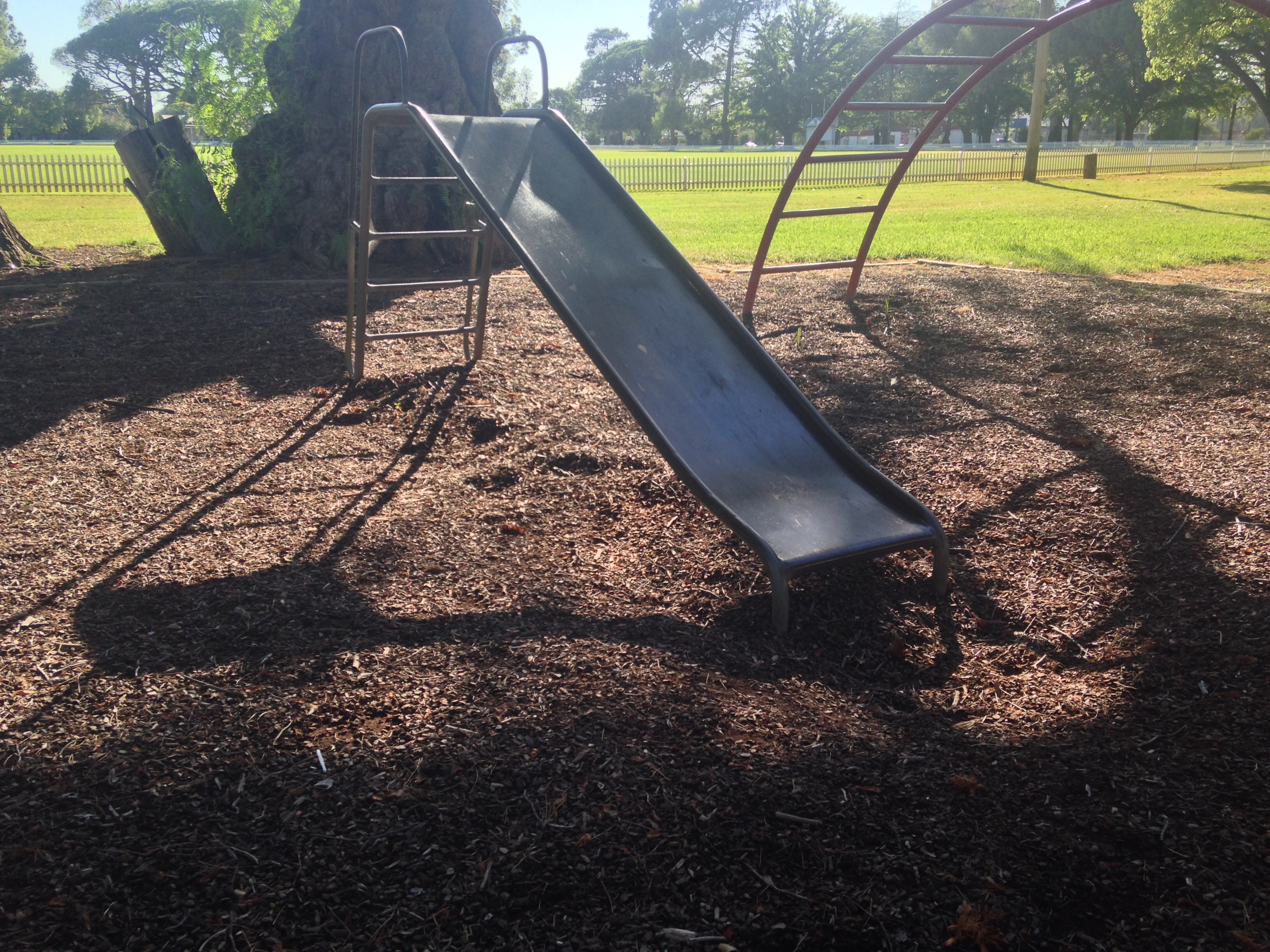
Most walks are not memorably mentionable. The picturesque views of the local park change with the weather throughout the year, as does the temperate comfort. Some birds are regulars, blending in to the expected scenery and sounds, barely noticeable outside my thoughts. Eastern Rosella’s add seasonal Spring delight with a welcoming site of colourful plumed characters that squawk-murmur amongst themselves. The park is typical of any rural locality, with tree lined grounds of well-kept deeply coloured grass surrounding a locally revered cricket oval, complete with white picket fence boundary. To the side of the carpark stands a small area of well battered sun faded play equipment. Signage of no dogs allowed adorn the picnic tabled chairs. It’s a place where as each day changes, they all blend to be the same.

A while ago I passed through the park, beagle slightly to the front of my side, pulling the lead hard as she chased scents of previous pedestrian visitors.

My expected normality though was breached by a man of stark white hair offset by dark rimmed glasses complimenting a neat buttoned down collared shirt with jeans that contrast against his seat on top of a slippery-dip; a solid steel slide welded to metal pipes, likely set in concrete fifty years earlier.

His position far from precarious only a few feet from the ground had the motions of a child as his legs swayed effortlessly back and forth, his eyes lost in a vision only he could see.

My concern for welfare soon passed as on noticing my approach he gave a mischievous smile imaging the same one he’d likely held there many years before when playing as a child. A depth of memories enlightened his face, fuelled by the timeless sensations of a place that stowed childhood carefree frivolity.

A smile, a nod, a glimmer of recognition between strangers of all that once was of childhood commonalities in a place of play.

Beyond the curve of the oval I turned for a final glance, he deep in thought again, legs swinging freely atop of the slide.